
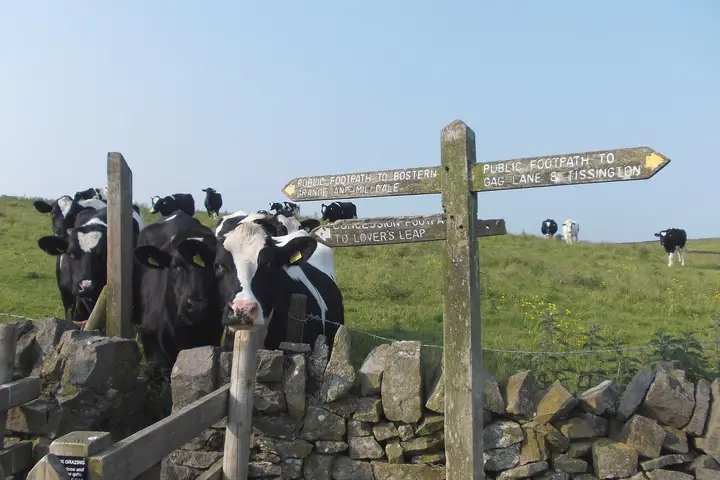
 All three parksCan you walk through a field of cows?
Photo: Neil Theasby, CC BY-SA 2.0, Wikimedia Commons, cropped.
Peak District
It is the custom of decorating wells and springs with large pictures made from flower petals pressed into wet clay. Villages across Derbyshire and the Peak put them up in turn, from spring to early autumn.
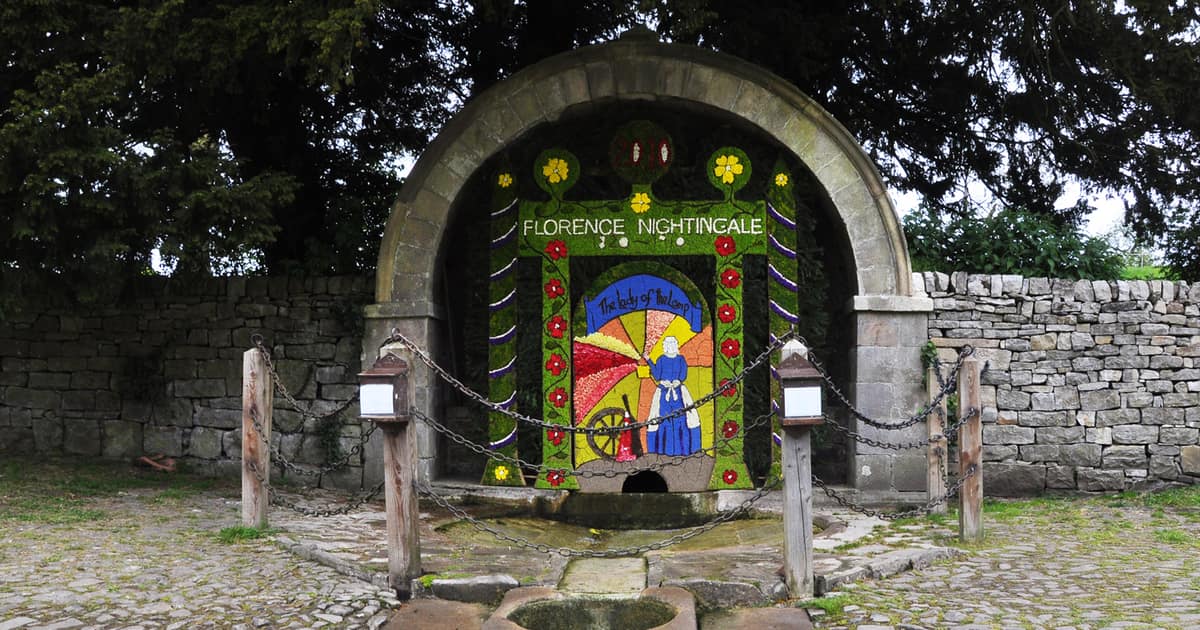
A well dressing is a temporary mosaic. Villagers build a wooden frame, cover it with clay, and then fill a drawn design with petals, moss, seeds and other natural materials. The board goes up at a well or spring, often with a short blessing, and stays for around a week before it dries and fades. The Pitt Rivers Museum says the custom is traditionally associated mostly with Derbyshire and the Peak District, though it has spread to other counties.
So if you want to see one, you need to know two things: which village is dressing its wells, and in which week. Our short calendar is further down.
The method in the Pitt Rivers account has changed little, and it is very much a team job.
Plenty of villages let you watch. The 2026 listing at welldressing.com gives "making" days for several, such as Tissington, Hayfield and Eyam, in the days just before the dedication. Those are the visits we would pick if you can manage them, because you see the craft as well as the finished picture.
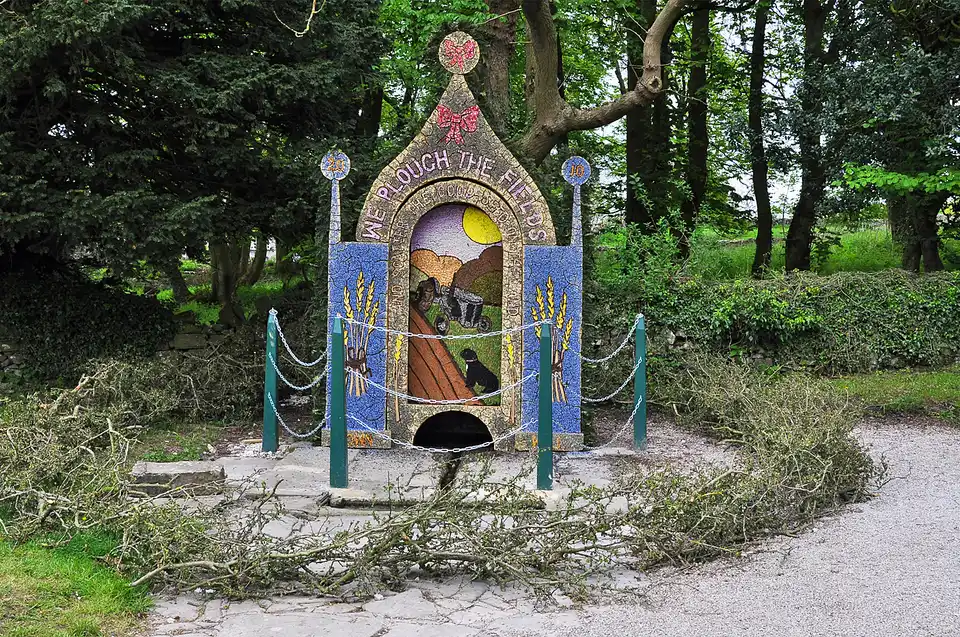
You will read confident origin stories, so treat them with care. The Pitt Rivers article says some sources claim the custom started in Tissington, while Eyam and Stoney Middleton dispute this. It has also been suggested that Tissington's well dressing began in thanksgiving for the village's escape from the Black Death, which villagers attributed to the purity of its water. But the museum is clear that the precise origins are unknown.
The firm ground comes later. The museum quotes a description of Tissington published in 1817, with wells adorned with flowers on Holy Thursday, a church service, and the psalms and readings said at each well in turn. By the 1880s a gazetteer could call the village famous for it. The custom has also had interruptions, including both world wars and the foot-and-mouth outbreak of 2001.
The Calendar Customs guide to British traditions sums up the shared meaning well enough: whatever its roots, a dressing is a thanksgiving for a supply of clean water.
Each village keeps its own week, so the season moves around the county in turn. Below are examples from the 2026 season. Use them as a guide to the rhythm rather than as future dates.
| Village | On display in 2026 | Making days listed |
|---|---|---|
| Tissington | 14 to 20 May | 10 to 13 May |
| Wirksworth | From 23 May | Not listed |
| Youlgrave | 20 to 27 June | 16 to 19 June |
| Hayfield | 27 June to 5 July | 22 to 26 June |
| Eyam | 29 August to 6 September | 25 to 28 August |
The listing shows other places on either side of these, from Chesterfield in April to later events in September. Tissington's date moves because it is tied to Ascension week. Calendar Customs gives Ascension Day 2027 as Thursday 6 May, so expect Tissington's dressings around then. Confirm with the village or the listing before you book anything, since details can change and the site itself asks readers to check again nearer the time.
Mostly, but not entirely. The welldressing.com listing includes events beyond the county, and its notes are a helpful reminder that the name covers more than one thing. It says the Ascension Day dressing at Bisley in Gloucestershire has a long history but does not take the typical Derbyshire form of pictorial petalled boards. It adds that the Malvern Spa weekend decorates many wells around the Malvern Hills, only some of which may have boards in the Derbyshire style. If petals pressed in clay are what you have come to see, check the description before you travel.
These are small places. The Pitt Rivers article puts Tissington's parish at nearer 200 people, which it calls a small number to run such a popular public event, so a dressing weekend can feel busy. Go midweek if you can, and allow time to walk between wells, since a village may dress several.
A few habits help:
A well dressing fits a slow, single-village day out very well. If you are still choosing a base, our comparison of the Dales, Peak and Lakes sets out how the Peak differs from its northern neighbours. Dressings are just one part of what makes a village landscape feel lived in; walls and field barns are another.
All three parksCan you walk through a field of cows?Photo: Neil Theasby, CC BY-SA 2.0, Wikimedia Commons, cropped.
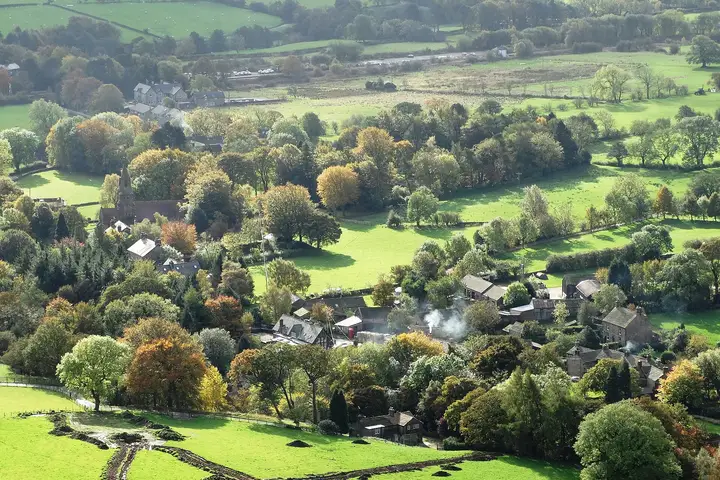 All three parksDales, Peak or Lakes: which one?
Photo: Neil Theasby, CC BY-SA 2.0, Wikimedia Commons, cropped.

