
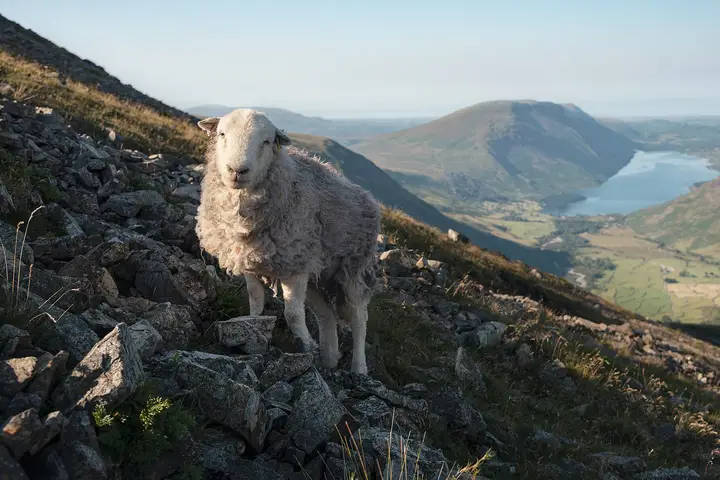
 Lake DistrictWhy fell sheep stay put with no fences
Photo: Julian Herzog, CC BY 4.0, Wikimedia Commons, cropped.
All three parks
Yes. A public footpath stays a public footpath when there is stock in the field. What changes is how you cross it, particularly with a dog or near calves.
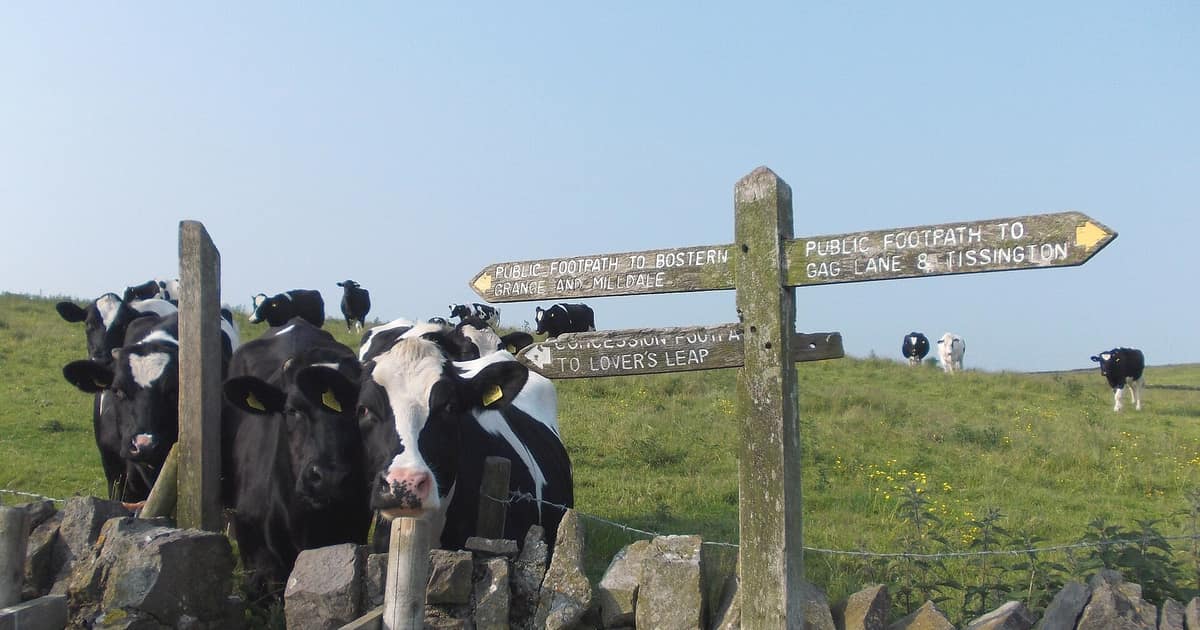
GOV.UK puts the basic right plainly: you can walk on all public rights of way. Farmers in the Dales, the Peak and the Lakes graze the same fields those paths cross, so a walk between two villages will often take you through sheep, and sometimes through cattle. You do not need permission, and you do not need to turn back because animals are present. This note covers England; Wales shares the Countryside Code, while Scotland has separate access law.
The sections below follow the situations walkers actually meet. It is general information, not legal advice. If you have a dispute over a path, the rights of way officer at the local council or national park authority is the right person to ask.
Most crossings are uneventful, but cattle deserve more respect than they usually get. The Health and Safety Executive says the two most common factors in incidents with the public are cows with calves and walkers with dogs. Almost all of those it hears about happen in fields and enclosed areas, and it warns that normally placid animals can become aggressive under stress.
The Countryside Code asks you to give livestock plenty of space, because their behaviour can be unpredictable, especially when they are with their young. It also tells you to stay on marked paths where you can. In practice that leaves a judgement call when a herd is standing on the line of the path. The British Mountaineering Council suggests going another way and avoiding the field if you can when calves are present. A short, sensible detour around a herd is a choice many walkers make, though a detour across private land is not a right, so keep it modest and come back to the path as soon as you can.
Curious young cattle often trot up to look at people. The BMC's advice for a field of suddenly wary cattle is to move away carefully and quietly, without panicking or making sudden noises. Keep going towards the nearest gate or boundary rather than stopping to look at them.
If you have a dog and you feel threatened, let go of the lead. That is official advice, not a counsel of despair. The Code says: do not risk getting hurt protecting your dog, and releasing it makes it easier for you both to reach safety. If someone is injured, call 999 and give the best location you can, as phone signal is unreliable in many rural places.
The rules depend on the kind of land you are on, and the difference catches people out.
| Where you are | What applies |
|---|---|
| Public footpath near livestock | Keep the dog under effective control. A lead around livestock is described as good practice, and local signs may require one. |
| Open access land, any time, near livestock | Lead required by law. |
| Open access land, 1 March to 31 July | Lead required even with no stock in sight, and no more than 2 metres long, to protect ground-nesting birds. |
| Anywhere, if a dog is attacking or chasing stock | A farmer can shoot it and may not be liable to compensate the owner. |
Open access land includes much of the high ground in all three national parks, so a walk that starts on a field path can move onto access land without any fuss. Look for the round brown symbol of a walker over hills. The Code also notes that some places restrict or ban dogs locally, except assistance dogs, and that those restrictions will be signed.
Lambing is the time to take most care. Farm animals can be harmed by a dog chasing them even if it never touches them. If yours cannot be trusted to walk to heel past sheep, the lead is the simple answer whatever the land type.
A bull on a right of way is not automatically illegal, which surprises many people. The HSE information sheet is written for farmers, and it sets out these positions for England and Wales:
Nobody expects a walker to identify a breed from the far side of a meadow. HSE says it is good practice for farmers to sign fields with a bull, or with cows and calves, and suggests a yellow triangular bull sign. A sign is information, not a closure. If you are uneasy, take another route. If you think an animal is dangerous, tell the local council or national park rights of way team.
The Code says to contact the local authority if you think a sign is illegal or misleading, and gives "private, no entry" on a public footpath as its example. HSE tells farmers that misleading signs meant to deter people from a right of access are likely to count as obstruction. Check an up-to-date map first, because paths do get diverted. Do not argue on the spot. Report it and walk on.
Sheep generally move away from people, so walk steadily and avoid pushing a group into a corner or against a wall. Do not feed any animal; the Code says that can harm them. Leave gates as you find them, since a farmer may have left one open on purpose to let stock reach water. If you are walking in a group, make sure the last person knows what to do with each gate. If a farmer is moving animals, follow the instructions you are given and wait.
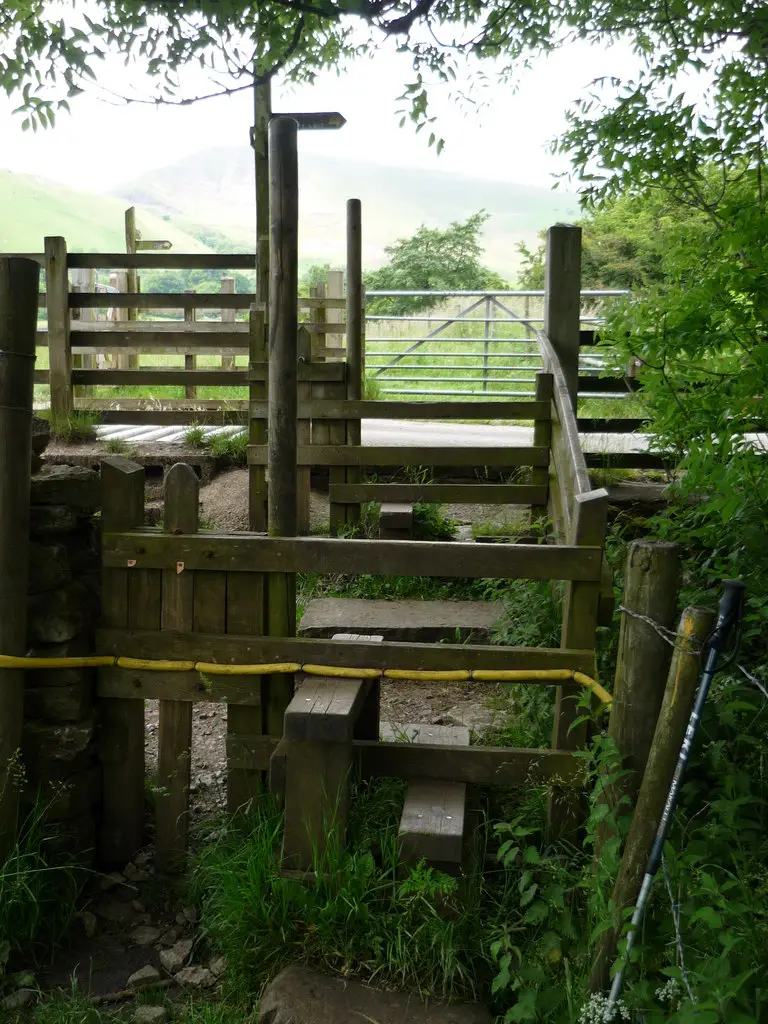
It also helps to know how these landscapes work. The sheep on a Lake District fell may be hefted to that ground, and the walls beside your path are old working structures that are easy to damage, so use the stile rather than climbing over. If a car-free day appeals, our note on reaching the Dales by train and bus pairs well with a linear field path walk.
Lake DistrictWhy fell sheep stay put with no fencesPhoto: Julian Herzog, CC BY 4.0, Wikimedia Commons, cropped.
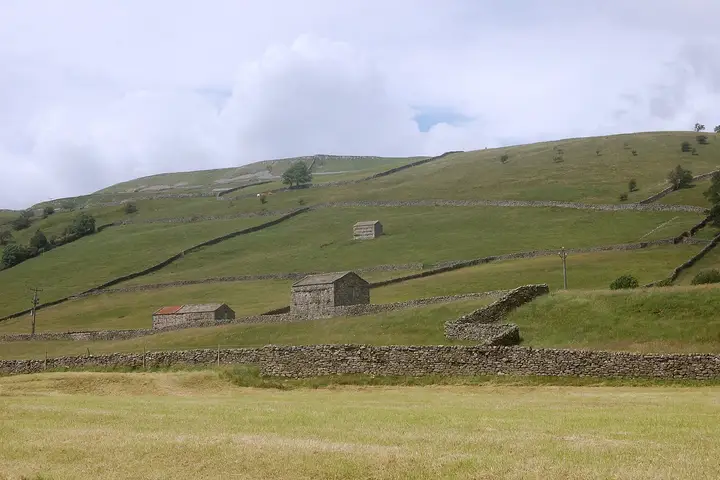 Yorkshire DalesWhy the Dales has so many walls
Photo: Bill Harrison, CC BY-SA 2.0, Wikimedia Commons, cropped.

